When a parking lot begins to crack, develop potholes, or show visible wear, most property owners know a repair is needed but not which repair method is best. One option that is often recommended is asphalt infrared patching. While this repair technique can be highly effective in the right situations, it is not always the best solution for every type of pavement damage.
In this article we will cover what asphalt infrared patching is, how it works, and the pros and cons of using it in Colorado. The goal is to provide clear, honest information so property owners can make informed decisions about their parking lot repairs.
What Is Asphalt Infrared Patching?
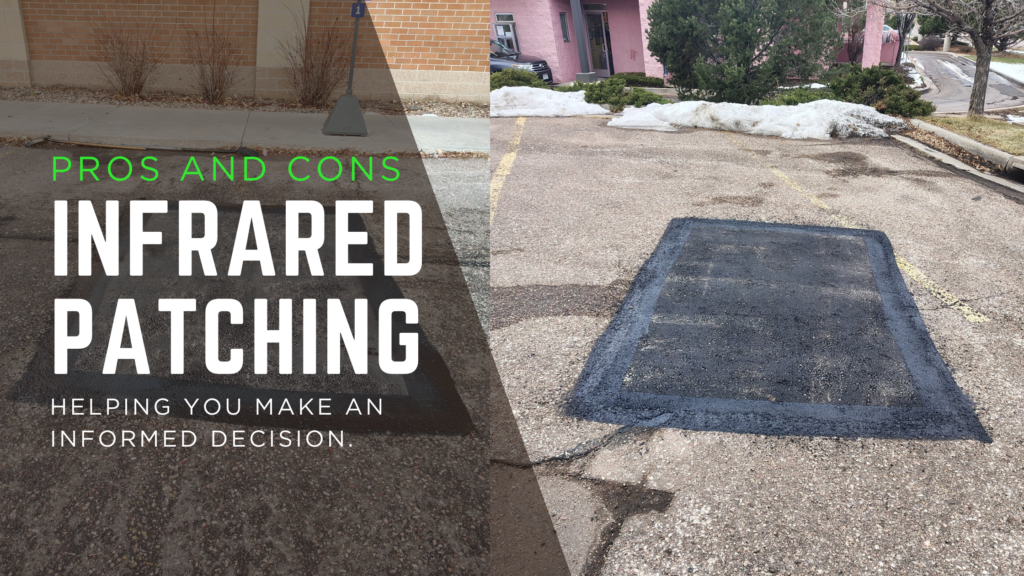
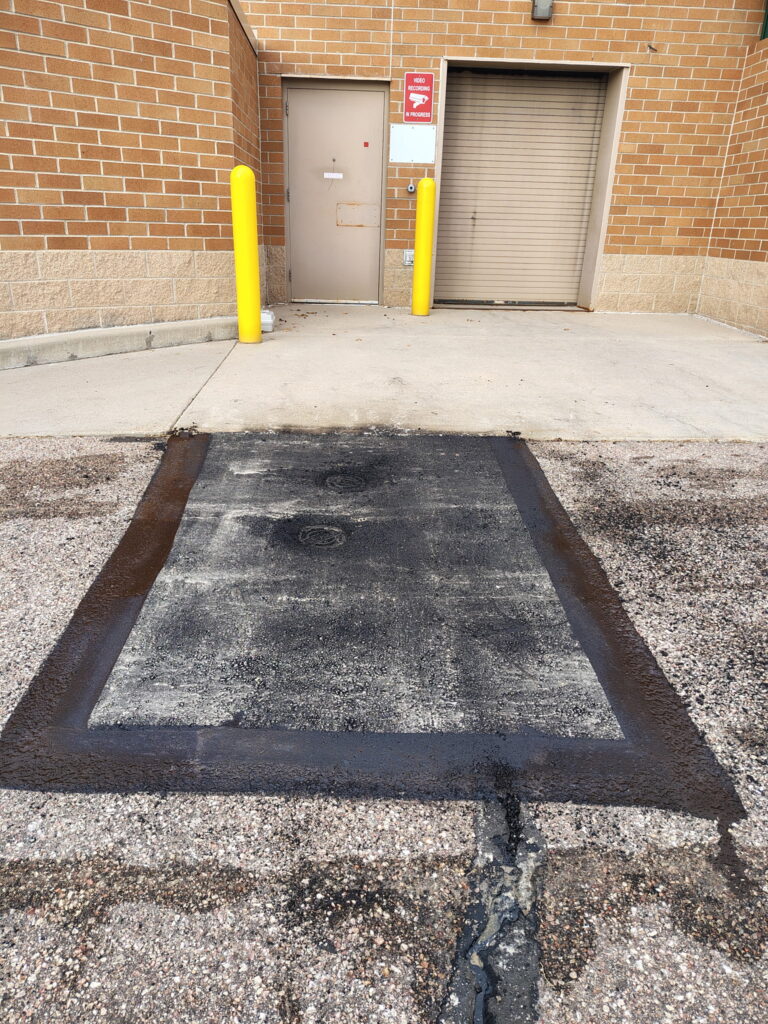
Asphalt infrared patching is a repair process that uses infrared heat to soften existing asphalt so it can be reworked rather than removed. The damaged area is heated until the asphalt becomes workable, allowing crews to rake out cracks and surface defects. A rejuvenating agent and additional asphalt material are blended in as needed, and the area is then compacted to create a smooth, uniform surface.
Unlike traditional saw-cut patching, asphalt infrared patching reuses much of the existing pavement. While this process still leaves a “patch”, it may appear more aesthetic than saw-cut sections.
Why Asphalt Infrared Patching Is Used in Colorado
Colorado’s climate is especially tough on asphalt. Large temperature swings, frequent freeze-thaw cycles, snowmelt, and intense UV exposure all contribute to cracking and surface deterioration. Infrared patching is often used when damage is caught early and the pavement’s foundation is still intact.
Because the repair eliminates seams where water can enter, infrared patching can help reduce future moisture intrusion which is a major cause of pavement failure in Colorado.
Advantages of Asphalt Infrared Patching
One of the primary benefits of asphalt infrared patching is the seamless finish it provides. Since the repaired area is blended into the surrounding pavement, there are no hard edges where water can penetrate. This is particularly important in Colorado, where trapped moisture can freeze, expand, and quickly worsen pavement damage.
Another advantage is speed. Full-depth patching can require extended time before cars can drive over the new asphalt patches. Infrared heat patches are completed in roughly 15-30 minutes and are able to be driven on immediately after. This reduces down time for businesses and communities where accessibility is critical.
Asphalt infrared patching is also a more sustainable repair option. Because much of the existing asphalt is reused, there is less waste sent to landfills and fewer raw materials required. This makes it an environmentally responsible choice when conditions allow.
Cost efficiency is yet another benefit of infrared patching. When used appropriately, it is much more affordable than full asphalt replacement while still extending the life of the pavement.
Limitations of Asphalt Infrared Patching
While asphalt infrared patching offers several benefits, it is not suitable for every situation. One of its biggest limitations is that it only addresses surface-level damage. If the underlying base or subgrade has failed, infrared patching will not correct the root cause of the problem.
In Colorado, base failure is common due to repeated freeze-thaw cycles and drainage issues. When water penetrates the asphalt and weakens the foundation beneath, surface repairs alone may provide only temporary improvement.
The size and severity of the damaged area also matter. Asphalt infrared patching is best suited for small to medium localized repairs. Extensive alligator cracking, deep potholes, or widespread pavement failure usually require more intensive repair methods such as full-depth patching or resurfacing.
The last thing to consider is the longevity. While infrared patches are great for emergency repairs, like potholes that spawn overnight after it snow, they aren’t a permanent repair option. Often, asphalt infrared patches will last between a year and two years in Colorado, after which another patch or repair option will be necessary.
When Asphalt Infrared Patching Makes Sense
Asphalt infrared patching is most effective when pavement damage is addressed early. Minor cracking, shallow potholes, and surface defects with a stable base are ideal candidates for this repair method. When used correctly, infrared patching can significantly extend the life of a parking lot and delay the need for larger capital repairs.
For property owners who want a clean appearance, minimal downtime, and a cost-effective solution, asphalt infrared patching can be an excellent choice.
When Another Repair Method May Be Better
If a parking lot shows signs of recurring potholes, widespread cracking, or standing water, asphalt infrared patching may not provide a lasting solution. These symptoms often indicate deeper structural issues that require more comprehensive repairs.
In these cases, a transparent contractor should explain why infrared patching may not be the best option and recommend alternatives that will perform better over time in Colorado’s demanding climate.
Choosing the Right Asphalt Repair Solution
Asphalt infrared patching is a valuable tool, but it is only one of many asphalt repair options. The right solution depends on the condition of the pavement, the stability of the base, traffic loads, and long-term maintenance goals.
An experienced asphalt contractor should evaluate these factors before recommending a repair approach. Choosing the right method from the start helps prevent wasted money on short-term fixes that fail prematurely.
Speak With an Asphalt Repair Specialist at M5 Paving
If you are unsure whether asphalt infrared patching is the right solution for your parking lot, the best next step is a professional evaluation. M5 Paving works with property owners throughout Colorado to provide honest assessments and repair recommendations based on real conditions, not guesswork.
Call M5 Paving today to speak with an asphalt repair specialist who can help you determine the best repair options for your parking lot and create a plan that fits your property, budget, and long-term goals.